A construction estimate can run to dozens of pages, but most of it follows the same structure. Once you know what each part means, you can review an estimate quickly, compare one against another and spot the places where a number might be hiding a problem.
This guide walks through a typical commercial estimate from top to bottom, using the CSI MasterFormat layout most contractors and owners in the US are used to.
The summary page
Most estimates open with a one-page summary: the project name, the drawings and specifications the estimate is based on, the date, and a total broken down by division. Check three things here before reading anything else:
- The document list. Make sure the estimate is based on the latest drawings and addenda. An estimate priced from an old set is pricing a different building.
- The estimate type. A conceptual budget, a design development estimate and a bid estimate have very different levels of accuracy.
- The date. Material prices move. An estimate that is several months old may need escalation.
Divisions and line items
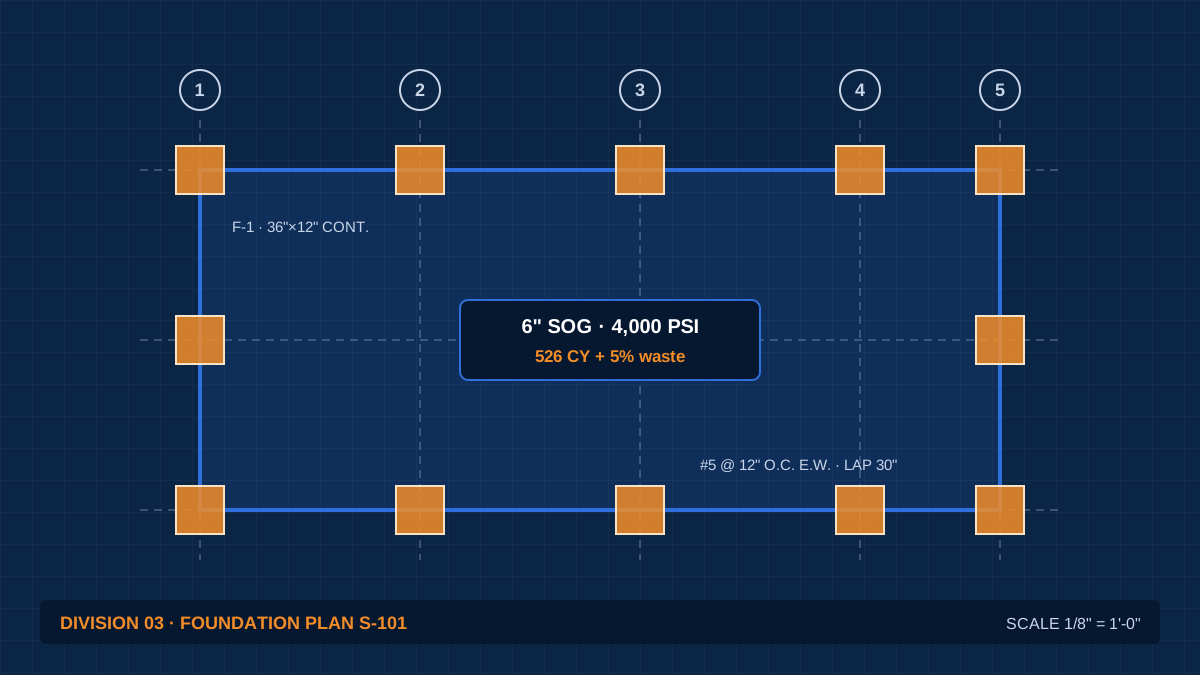
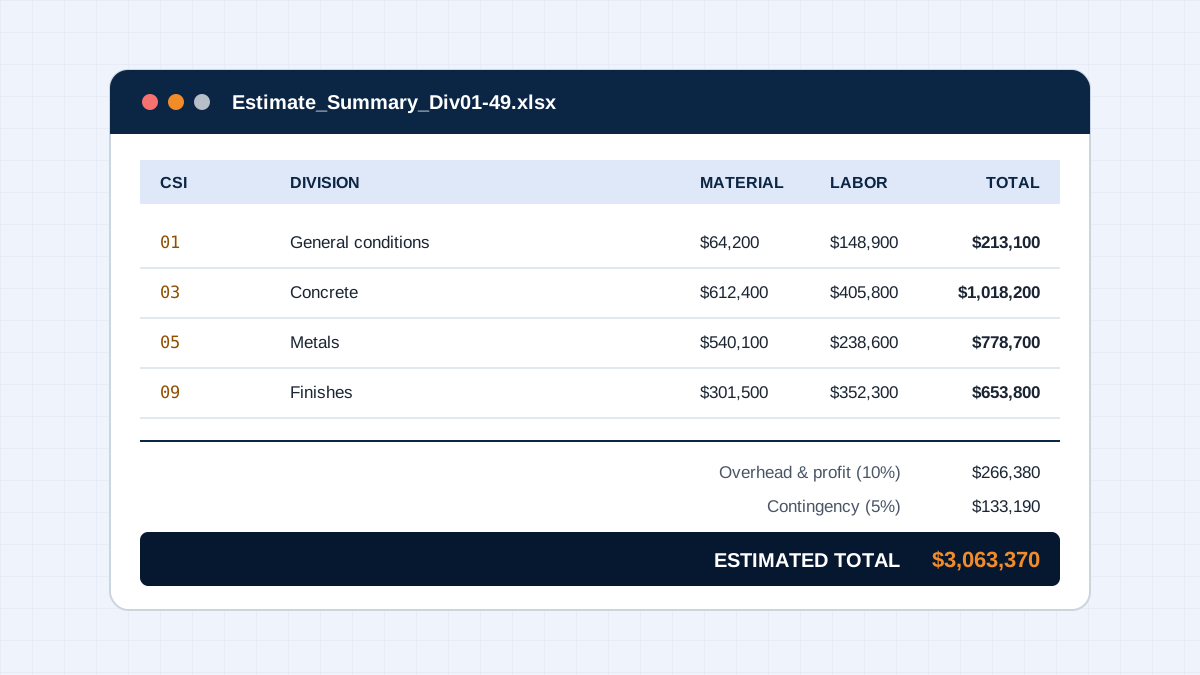
Below the summary, costs are grouped by CSI division: 03 for concrete, 05 for metals, 09 for finishes, 22 for plumbing, 26 for electrical and so on. Each division is broken into line items, and each line item usually has the same columns:
| Column | What it tells you |
|---|---|
| Code | The MasterFormat section, so you can find the matching spec section |
| Description | What's being priced, ideally with size, type and location |
| Quantity and unit | How much, in cubic yards, square feet, linear feet, each and so on |
| Material | Cost of the materials per unit |
| Labor | Crew cost per unit, based on production rates and wage rates |
| Equipment | Equipment cost per unit, where it applies |
| Total | Quantity multiplied by the combined unit cost |
Labor rates and productivity
Labor is often the most variable part of an estimate. Two things drive it: the wage rate and the productivity, meaning how many units a crew installs per hour or per day.
Look for whether the estimate assumes union, open-shop or prevailing-wage labor, because the difference can be large. Then look for anything that slows crews down: work at height, occupied buildings, phased construction, tight sites or night work. A good estimate adjusts productivity for these conditions rather than using a single average.
Equipment and general conditions
Division 01 covers the costs of running the job rather than building a specific part of it: supervision, the site trailer, temporary power and water, dumpsters, cleaning, safety, survey and so on. Many of these are time-based, so they should line up with the schedule.
Equipment such as cranes, lifts and scaffolding may sit in Division 01 or within the trades that use them. Either is fine, as long as it isn't counted twice or left out entirely.
Markups: overhead, profit, contingency and escalation
After direct costs, most estimates add several markups. They are usually shown as percentages so they're easy to adjust:
- Overhead covers the contractor's office costs that aren't specific to this job.
- Profit is the contractor's margin.
- Contingency covers risk and unknowns. Early-stage estimates carry more, because more of the design is still unknown.
- Escalation covers expected cost increases between the estimate date and when the work is bought out.
- Bonds and insurance are often calculated as a percentage of the total.
Ask what each percentage is applied to. Applying profit before or after contingency, for example, changes the total.
Assumptions, inclusions and exclusions
The most important part of an estimate is often the last page. Assumptions explain how the estimator interpreted unclear items. Inclusions and exclusions say exactly what's in the number and what isn't.
Read this section carefully and look for anything that should be in your scope but isn't, such as permits, testing, utility fees, temporary protection or work by others. If an item is excluded, someone still has to pay for it.
Questions to ask before you sign
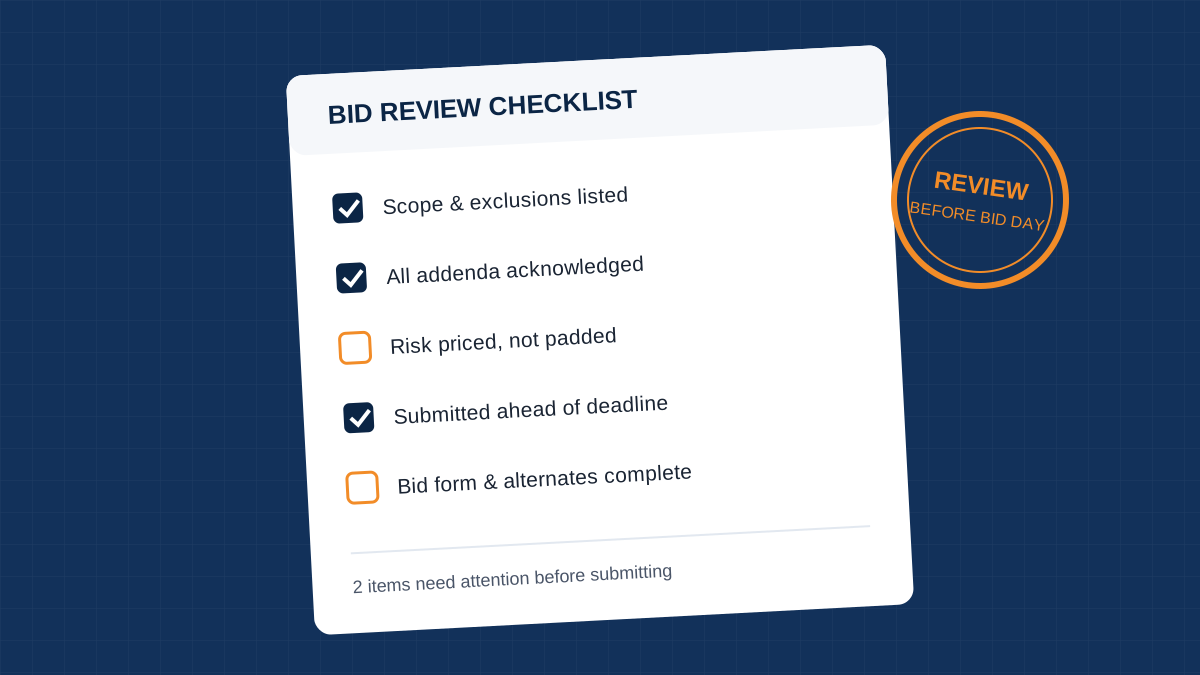
- Which drawings, specifications and addenda is this estimate based on?
- Are the quantities measured from the drawings or estimated from square footage?
- What labor rates and productivity assumptions were used?
- What does the contingency cover, and who controls it?
- What is excluded, and who is responsible for those items?
An estimate that answers these questions clearly is one you can rely on. If you want help reviewing an estimate, or need one prepared, our construction cost estimating service delivers line-item estimates organized exactly this way.
Daniel Brooks
Founder & Chief Estimator, Bidnora Engineering
Daniel has spent 16 years in preconstruction on commercial, structural concrete and healthcare projects, first as a GC estimator and later as a preconstruction director. He leads Bidnora Engineering's estimating standards.